Mariupol – City of Happiness, City of a Ghost
Event overview
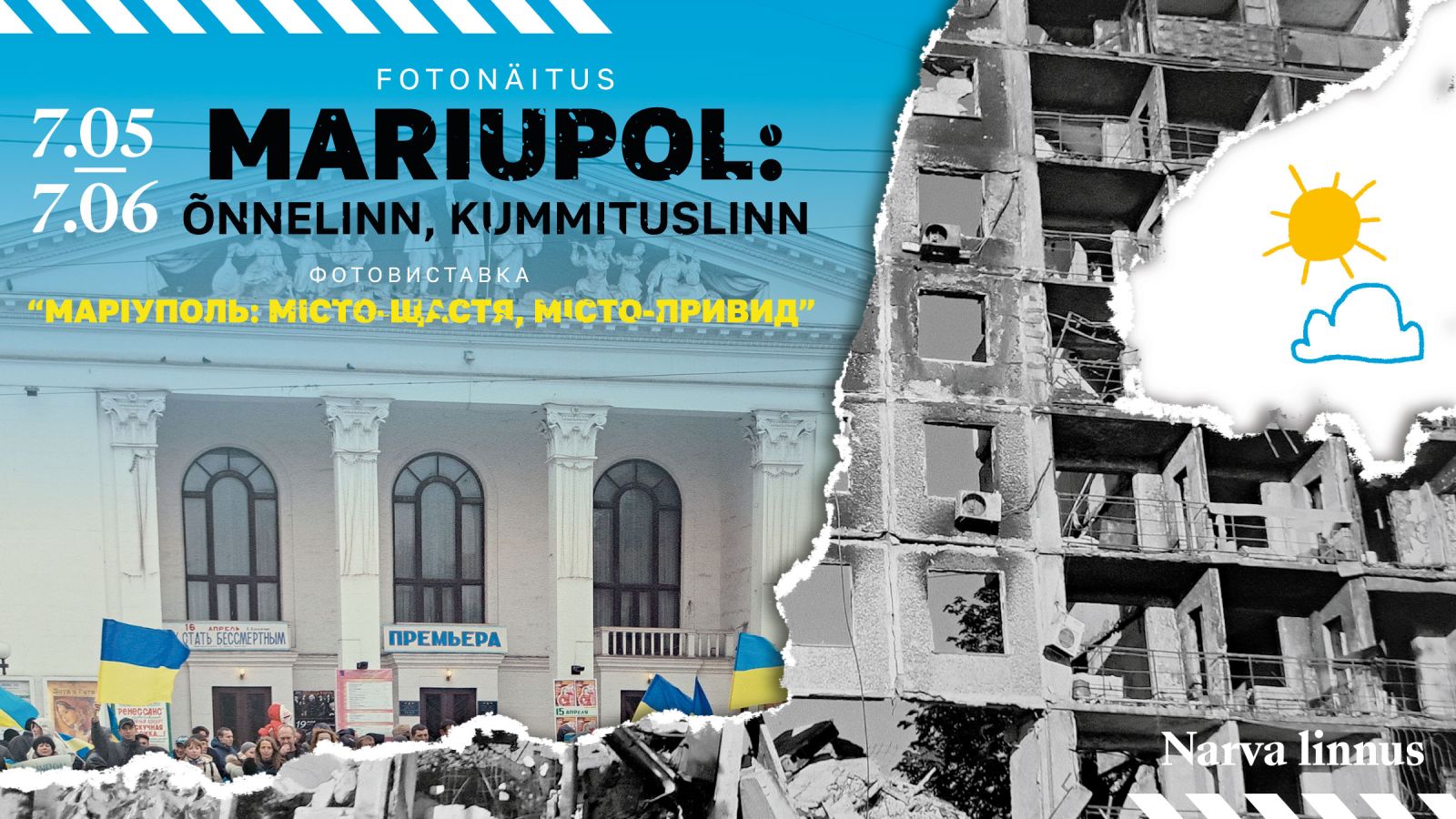
The exhibition“Mariupol – City of Happiness, City of a Ghost”
The exhibition “Mariupol – City of Happiness, City of a Ghost” is a visual testimony to the life of the city before and after its destruction as a result of Russia’s full-scale invasion of Ukraine and the missile attacks on Mariupol carried out by Russian forces. The exhibition brings together two contrasting images: a peaceful, vibrant, flourishing city — and a city reduced to ruins by war.
Photographs of pre-war Mariupol are presented through the work of professional photographer Dmytro Chycherа, provided by his wife Liudmyla. Dmytro was a well-known volunteer and civic activist in the city, founder of the Mariupol School of Photography, co-founder of the Center for Social Initiatives “Skhidna Brama” (“Eastern Gate”), and the free space “Halabuda.” His images convey the atmosphere of a city full of life, creativity, and hope.
After the beginning of Russia’s full-scale invasion of Ukraine, Dmytro Chycherа remained in Mariupol even when street fighting had already begun and regular units of the Russian army had entered the city. He continued to assist civilians and Ukrainian military personnel. On March 17, 2022, Dmytro Chycherа went missing, and his fate remains unknown to this day.
Another part of the exhibition consists of photographs by Tetiana Lytvyn, taken during the destruction of the city. Using her smartphone, she documented the consequences of missile attacks and the масштаб devastation inflicted on Mariupol by Russian forces. Her images are direct testimonies of war, captured under conditions of danger and uncertainty.
For the first time, the exhibition presents children’s letters written in the basement of a maternity hospital, which served as a bomb shelter during the fighting. All the authors of these letters were children under the age of 14. They wrote them while living in constant danger, addressing a peaceful future: imagining what they would do after the war ended, reflecting on their lives, and sharing their hopes and fears.
The idea of writing these letters was proposed by Natalia Lohozynska, who was in the shelter together with the children. The aim was to support them emotionally, to give them a way to express their feelings, and to help them maintain inner resilience amid the horror of what was happening. According to their agreement, Natalia will write a reply to each child once the war ends and peace comes. Unfortunately, that day has not yet arrived.
It is known that all the children who wrote these letters survived, and Natalia continues to stay in touch with some of them.
The exhibition addresses the viewer as a witness to the tragedy caused by the war unleashed by Russia against Ukraine. It not only reveals the contrast between Mariupol’s past and present, but also underscores the price paid by cities and people. It is an attempt to preserve memory, to name the causes of what has happened, and to ensure that the truth about the destruction of the city and the fate of its residents is not silenced.
The project was created by the NGO Mariupol Free with the support of partner organizations and international foundations, including the Open Estonia Foundation, the Congress of Ukrainians in Estonia, and with financial support from the European Economic Area and Norway Grants.
The exhibition will remain open until 7 June and can be visited during the opening hours of Narva Castle.